How TradingView Charts Reveal the Difference Between a Trend and a Drift
Trading markets can have seemingly similar trends on the surface but have completely different implications for those trying to trade them. A sustained directional move reflecting genuine conviction among market participants behaves differently from a slow, directionless drift. The latter traces a path without the structural integrity a real trend requires. Treating those two conditions as equivalent produces entries that seem well-positioned but then stall, reverse without warning, or deliver far less movement than the initial directional read suggested.
A genuine trend has internal organization. It produces swings of meaningful magnitude in the primary direction, with retracements that respect prior structure and resume the directional move before undercutting significant levels. The advances are purposeful and the pullbacks have a contained quality, as though the market is consolidating before resuming rather than losing directional interest entirely. Volume tends to confirm the pattern, expanding during the impulse phases and contracting during consolidation, which reflects active participation rather than passive drift. That internal organization gives a trend its predictive value and makes position management within it considerably more reliable.
Drift lacks that organization. Price moves in a general direction but without the rhythmic structure that defines a genuine trend. Highs and lows form inconsistently. Retracements cut deeper than expected and sometimes undercut prior swing points without producing the follow-through that would confirm a genuine trend change. Volume is often flat or erratic throughout, offering no confirmation of directional intent. Traders who enter these conditions expecting trend behavior find that the position moves in their favor briefly before giving back gains in a similarly slow and directionless way, producing results that are difficult to manage and rarely satisfying even when technically profitable.
Distinguishing between the two conditions is where TradingView charts become particularly useful, because the platform allows traders to evaluate the structural quality of a move across multiple timeframes simultaneously. A move that looks like a trend on a shorter timeframe sometimes reveals itself as drift when the daily or weekly chart is examined, showing that the recent directional movement represents only a minor swing within a larger, sideways range. That context changes everything about how the move should be traded, from position sizing to target selection to the level of confidence appropriate for the entry.
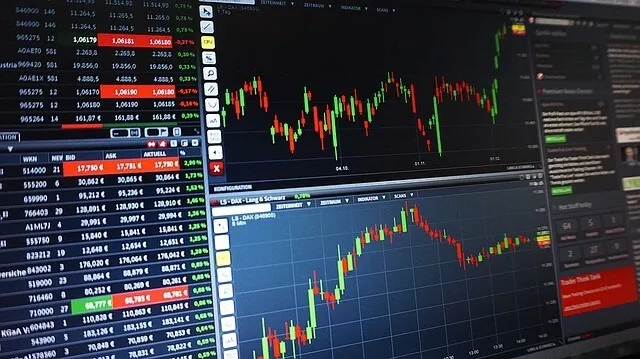
Image Source: Pixabay
Swing point analysis is the most direct tool for making this distinction. Mapping the sequence of highs and lows on the relevant timeframe reveals clearer evidence of trend quality than any momentum indicator alone. When the swing points confirm a structured sequence, the trend designation is defensible. When they are irregular or overlapping, the drift designation is more accurate regardless of what the slope of a moving average suggests. Price structure is more revealing than smoothed averages about what a market is doing.
The practical value of making this distinction before entering a position is significant. Trends reward holding. Drifts reward taking profits quickly and managing positions with shorter leashes. Applying trend-following management to a drifting market produces unnecessary drawdowns, while applying tight management to a genuine trend produces premature exits that leave the bulk of the move uncaptured. Traders who use TradingView charts to identify which condition is present before committing capital allow the entire position management plan to be calibrated appropriately from the start, which is a far more reliable approach than trying to adapt in real time once the trade is already open.

Comments